
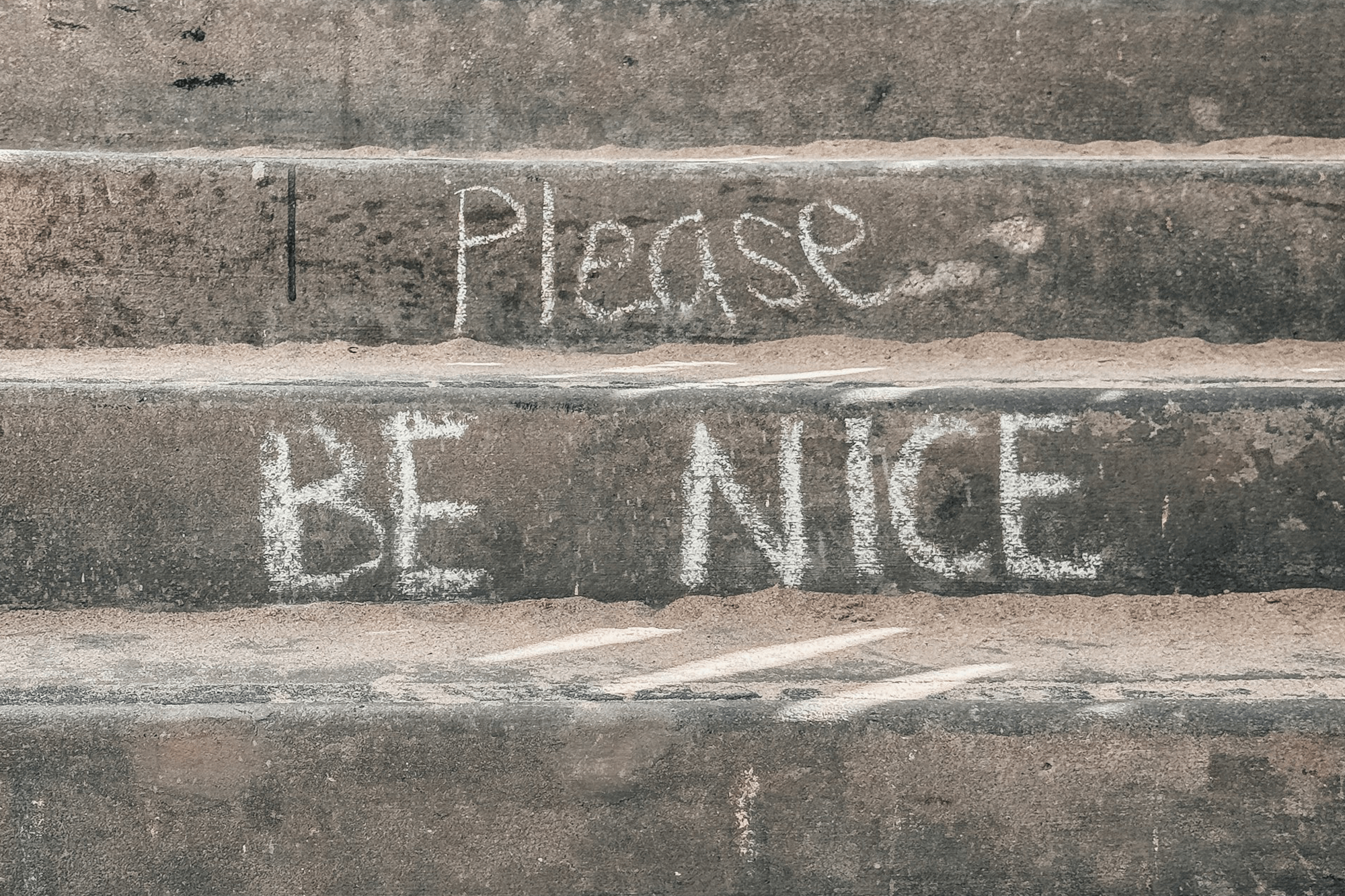

"Did COVID kill our kindness?"
My client said this to me after a workshop where there was an overwhelming “lament for lost community.”
Our professional interactions are so much nastier than they used to be.
As a facilitator, I am routinely called in to work with groups of people who don’t know how to explore different perspectives which is the VERY definition of Civility . . . the ability to engage kindly with one another when we disagree so we can hear each other and emerge with deeper understanding. And it is, sadly, on the decline.
But, so what? Why should you care?
As civility decreases, trust in others decreases. The more we distrust, the more we accept violence as a means of problem solving. A greater acceptance of violence leads to lower trust in institutions. The more we distrust institutions, the more we erode civil society. It is a downward spiral.
Incivility is costing us our humanity, community and, increasingly, cultural cohesion.
There’s a funny disconnect in the research about civility.
Surveys reveal that 90% of people believe they treat others with respect, even when they disagree BUT 30% say most people can’t be trusted, AND ONLY 43% say they believe people are generally kind.
But wait, it gets worse.
Incivility negatively affects personal well-being, mental health, teamwork, and performance. Higher levels of incivility reduce psychological safety, and that leads to worse performance, less innovation, less creativity.
We offer incivility without thinking. We’re so pleased with ourselves when we honk at someone, flip them off, or come back with the pithy insult or a cutting reply on social media. But this is humiliation. And humiliation is the nuclear bomb of conflict. When you humiliate someone, there will be a negative result - one you might not see right away. When we disrespect with intent, we guarantee worse outcomes.
It’s tempting to look away from rising levels of incivility, and hope it goes away. But waiting is dangerous because Civility is the foundation of public life.
Civility recognizes that the person across from us is a fellow citizen, not an enemy.
My husband and I were in Japan recently, and I was struck by the deep experience of civility on offer. At every turn you experience small acts of civility. The train conductor bows to everyone on the train car. Our dinner server thanked us every time she placed a dish in front of us. Retail clerks bow to you. There’s no eating on a train and no walking around with food. There’s certainly no face-time calls in a public cafe and definitely no swearing.
We were in Denmark a few years ago, and we commented on the lack of honking and swearing and our server said, “Oh no, That’s not very Danish”.
Civility is a positive multiplier. When you give it, it is returned with interest.
In Japan the streets are so clean that when I dropped candies, I picked them up and put them in my pocket until I could find a garbage can so I didn’t mess with the clean streets. I bowed so deeply to the cleaning staff who helped us get unlost in the train station, she probably thought I was crazy.
When you say good morning, I’ll say good morning.
When you let me into traffic, I will wave.
Uncivil behaviour is often unawareness versus ill intent. We direct more care to ourselves than to our fellow citizens. Bluntly stated, we’re oblivious. And that means that it’s easy to do better.
Recently, I was talking with elected officials and asking them how they coped with the volume of online abuse. Their answer? Model what good looks like, and then uphold it. Pretty soon others do, too.
- It is a deep act of civility to make an honest effort to understand someone you disagree with.
- It is a deep act of civility to object to incivility when you see it.
- It is a deep act of civility to give your whole presence to the person in front of you (close your laptop and put your phone away).
- It is a deep act of civility to genuinely listen.
- It is a deep act of civility to smile at someone.
I am calling for a CIVIL revolution! Be kind. Model civility. Stop tolerating incivility.
True progress comes from persuasion, not intimidation. Old-fashioned, I know, but also really easy.
What will you do today to multiply civility?
Photo by Elena Takmakova on Unsplash

Robin has more than twenty-five years of experience as an effective leader and strategic thinker. She helps organizations have better conversations that help them work together more effectively.
Read full BioParsons Dialogue is based in Calgary, Canada, serving clients across North America. We design and facilitate strategic processes that help teams collaborate with clarity and confidence.




Tap into your team’s problem solving potential
Explore our services
Parsons Facilitation is based in Calgary, Canada, serving clients across North America. We design and facilitate strategic processes that help teams collaborate with clarity and confidence.
Privacy Policy